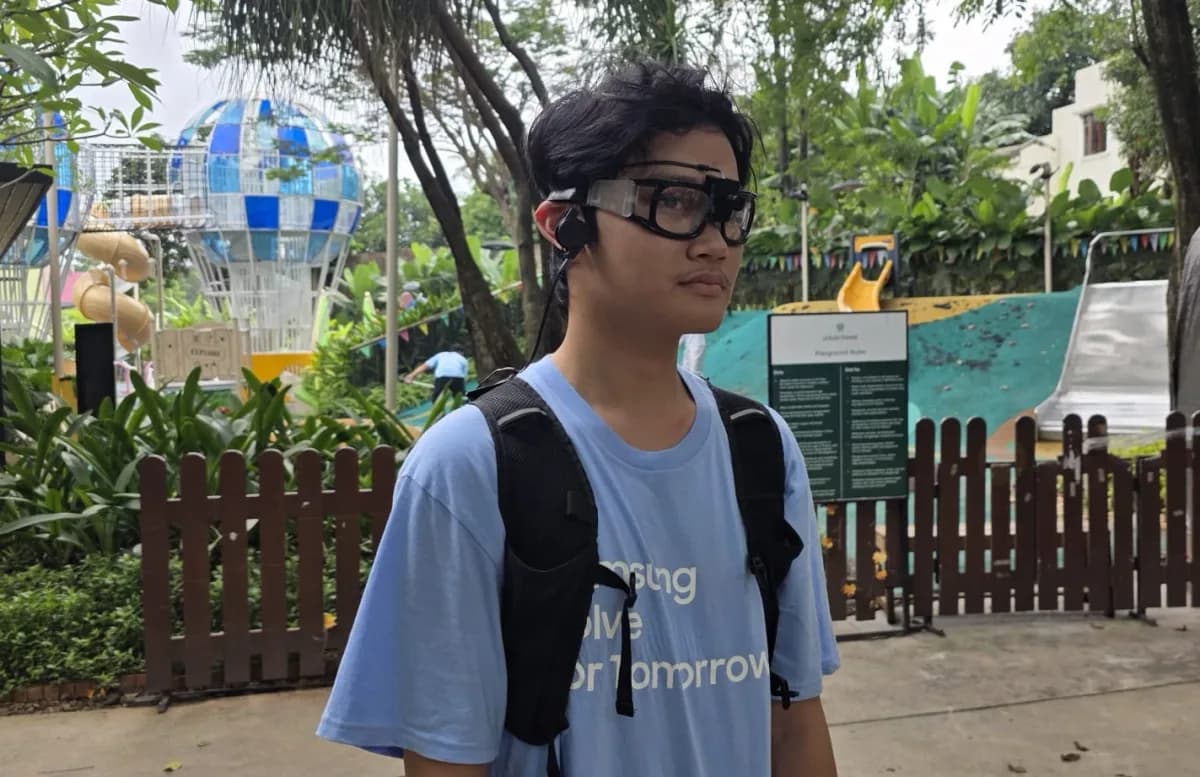
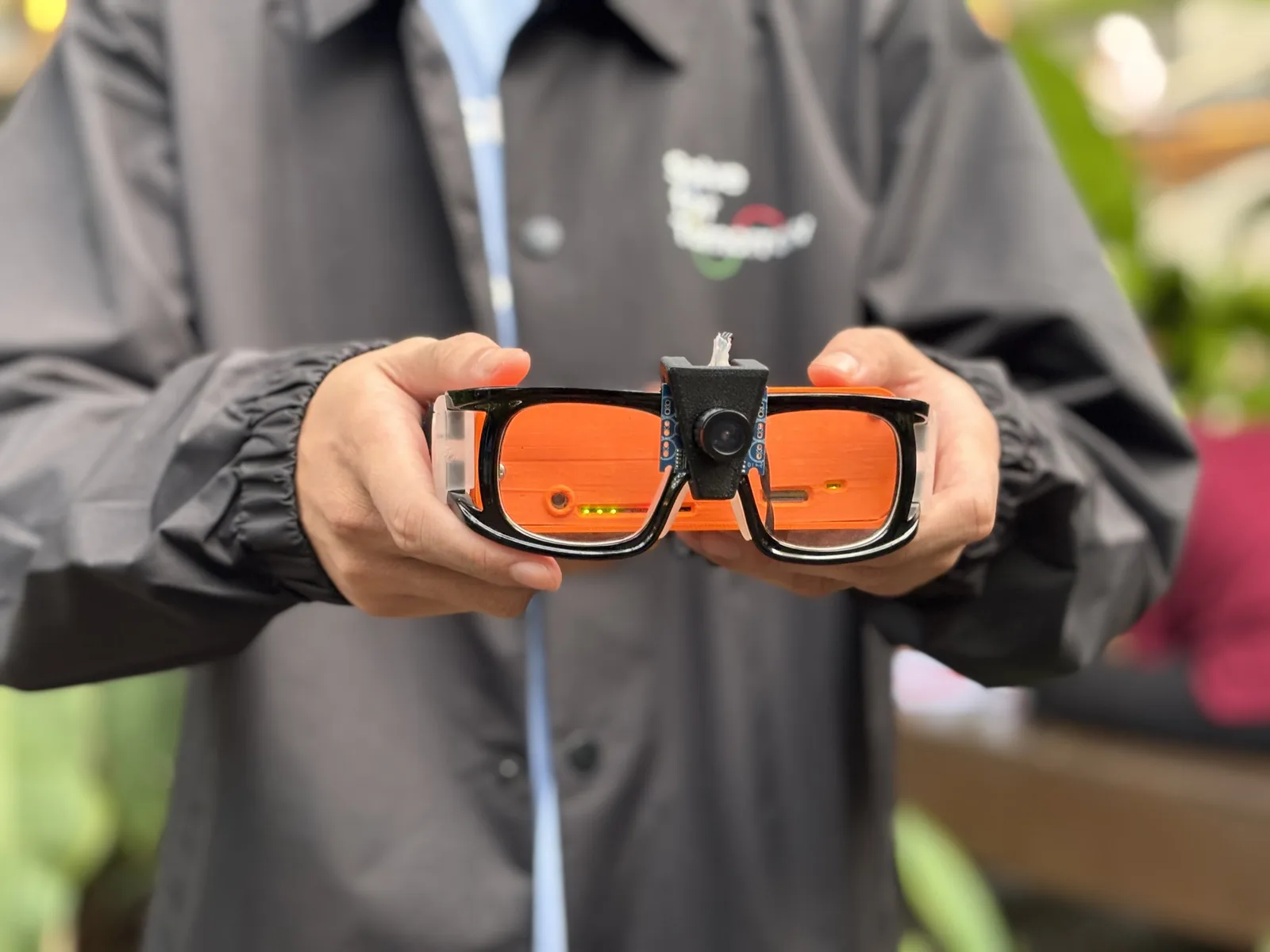
The camera at eye level. The computer in a running vest.
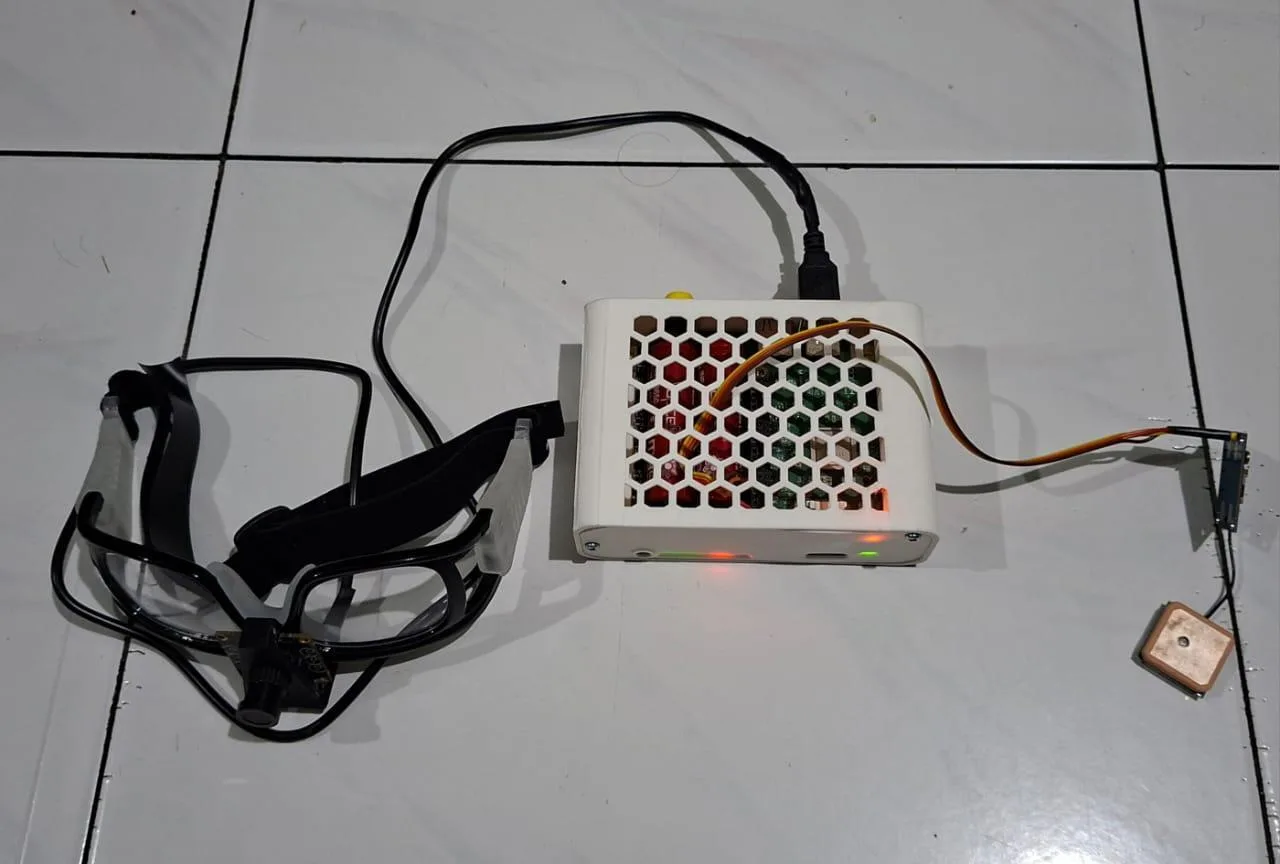
The camera sits on the glasses. The computer, battery and GPS ride in a running vest, while spoken guidance reaches the runner through an earphone. A phone is not required during the run.
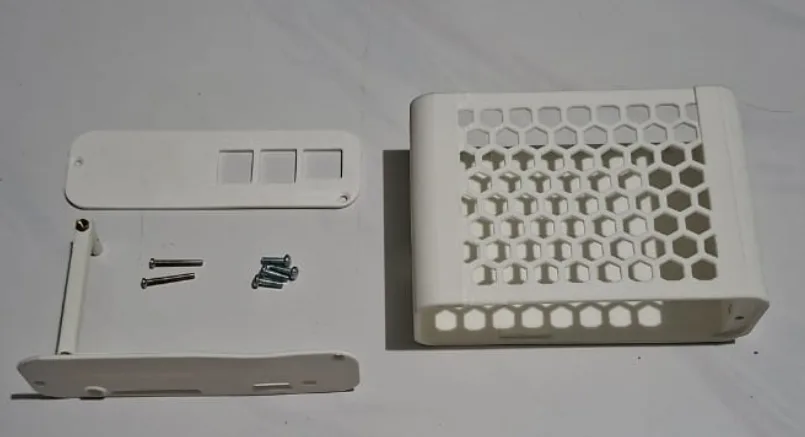
A Raspberry Pi, an AI accelerator, and a printed case. That is the entire computer.
Specifications
RunSight uses widely available components so the prototype can be repaired or rebuilt without custom electronics.
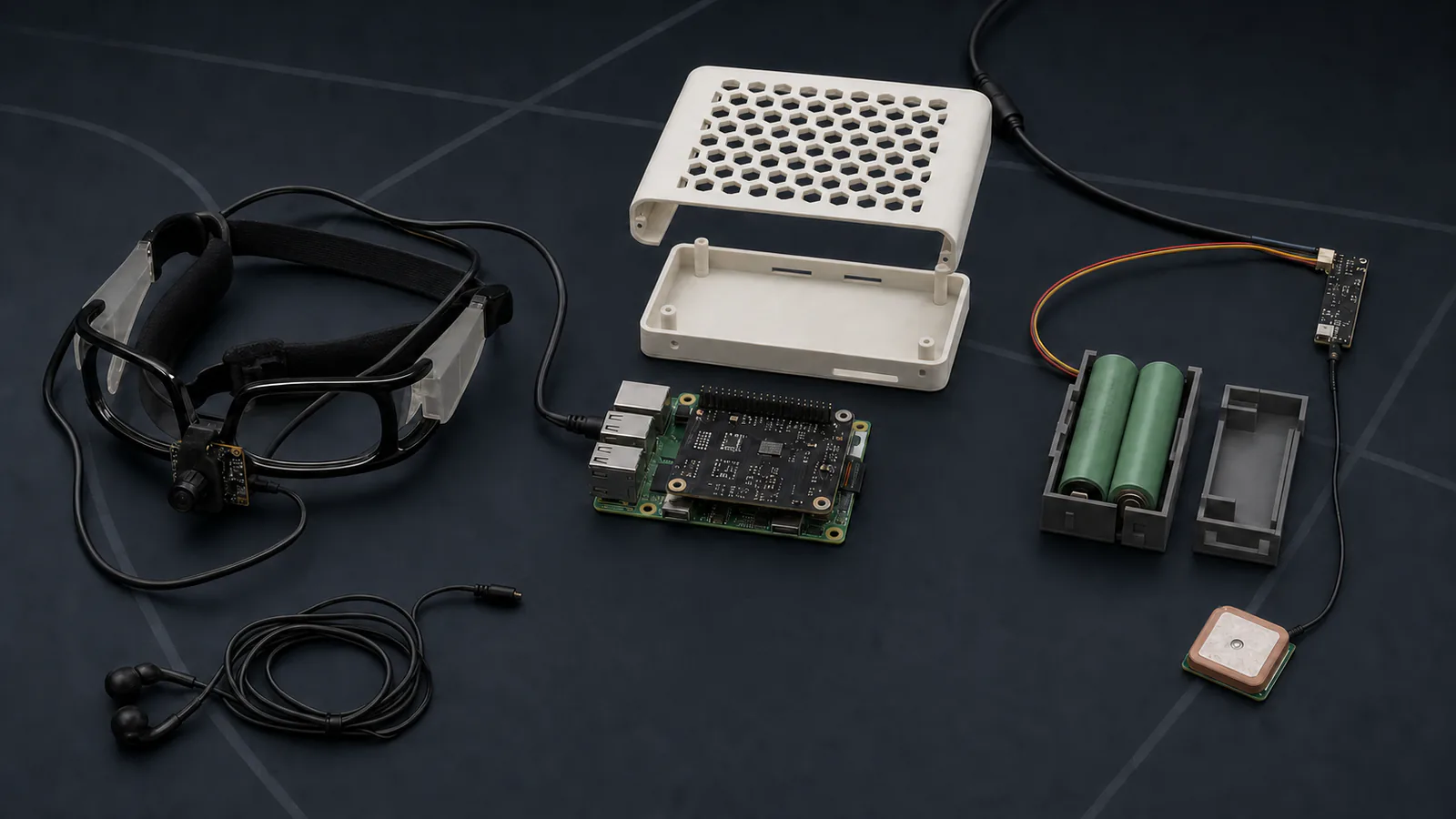
USB camera3D-printed caseRaspberry Pi 5 + Hailo AI HATUPS HAT + 18650 cellsGPS moduleAudio
- USB camera
- 3D-printed case
- Raspberry Pi 5 + Hailo AI HAT
- UPS HAT + 18650 cells
- GPS module
- Audio
- Compute
- Raspberry Pi 5Runs the entire guidance loop locally.
- AI accelerator
- Hailo-8 AI HATRuns the compiled models. This is why the loop keeps up.
- Camera
- USB RGB cameraEye level, on the glasses. It looks where you look.
- Positioning
- GPS (gpsd)Route, distance and pace, plus the clock when offline.
- Audio
- Wired earphoneWired today; Bluetooth audio is on the roadmap.
- Power
- 2 × 18650 · 3,500 mAh · UPS HATTwo rechargeable cells and an uninterruptible supply.
- Link
- Bluetooth LE (GATT)The only radio the device uses. No Wi-Fi, no SIM.
- Controls
- Single buttonStart, stop and emergency stop, without the phone.
Controls
It works with your hands, not your eyes.
A run can start, pause and end without sight and without the phone. Every action is confirmed out loud.
- Tap
- Starts a run when the device is ready, and ends the one in progress. The phone is optional.
- From the app
- Pause and resume travel over Bluetooth while a run is active, and the session stays open.
- Hold
- Emergency stop. Valid from any state, announced immediately, and it always wins.
- Hold 3s when idle
- Clears the pairing so another phone can claim the device. Otherwise, first claim wins.
From a printed case to a wearable prototype.
The case, the camera mount and the glasses bracket are 3D-printed. Everything else bolts in.